
Greenville Premises Liability Lawyer
An injury on someone else's property can leave you dealing with medical care, missed work, and questions about who was responsible. The property owner or insurer may argue that the danger was obvious, that no one knew about it, or that you should have avoided it. A Greenville premises liability lawyer can investigate what the owner knew, who controlled the property, and whether reasonable steps could have prevented your injury.
At Mooneyham Berry, we bring more than 40 years of combined experience to representing injured people across the Upstate. We understand that a serious property injury can affect your health, income, mobility, and independence. Our attorneys investigate the conditions that caused your injury, protect your interests, and prepare the claim for litigation when necessary.
If unsafe conditions on someone else's property caused your injuries, contact Mooneyham Berry and tell us what happened.
Legal Advocacy
Trial Tested
Client Focused
Case Forward
What You Must Prove in a South Carolina Premises Liability Claim
Being injured on someone else's property does not automatically make the owner responsible. In many premises liability claims, an important question is what the property owner knew about the dangerous condition and when.
South Carolina courts generally require an injured person to show that the property owner created the dangerous condition or had actual or constructive notice of it and failed to address it. Constructive notice may exist when a hazard remained long enough that the owner should have discovered it through reasonable care.
The South Carolina Supreme Court addressed this issue in Wintersteen v. Food Lion. A shopper slipped near a self-service drink station where spills were foreseeable. The Court still required evidence that the store created the condition or had actual or constructive notice of it. Foreseeability alone did not replace the notice requirement.
That makes timing and property records important. At Mooneyham Berry, we investigate questions such as:
- How long was the dangerous condition present?
- Did an employee or property owner know about it?
- When was the area last inspected or cleaned?
- Were there earlier complaints or similar incidents?
- Did surveillance footage capture the hazard before the injury?
Inspection logs, maintenance records, employee testimony, surveillance footage, and prior incident reports may help answer those questions. Important evidence about what a property owner knew may be contained in records the owner or business controls.
The Property Owner's Duty Depends on Why You Were There
The duty a property owner owes you can also depend on why you were on the property:
- Invitees: Customers and others invited onto property for the owner's benefit are generally owed a duty of reasonable care.
- Licensees: Social guests and certain others on the property with permission are generally owed a more limited duty concerning known dangers.
- Trespassers: Property owners generally owe a more limited duty to people who enter without permission.
- Children: Different rules may apply when a dangerous condition attracts a child who enters the property.
Property owners generally have a duty to warn invitees about latent or hidden dangers they know or should know about. An owner may argue that a condition was open and obvious and that no warning was necessary.
Mooneyham Berry examines the circumstances surrounding the injury, including visibility, lighting, warnings, and what you could reasonably perceive. We also look at what the property owner knew and what steps were taken before someone was hurt.
Premises Liability Claims on Different Types of Property
Unsafe conditions can exist on commercial, residential, private, or public property. Who may be responsible depends on who owned, occupied, maintained, or controlled the area where the injury occurred. At Mooneyham Berry, we look beyond the property address to determine who was responsible for keeping that particular space safe.
Stores, Restaurants, and Other Businesses
Spills, wet entryways, cluttered aisles, loose flooring, and other hazards can cause injuries in stores and restaurants. Busy areas such as downtown Greenville and shopping centers throughout the city can also have frequent customer and employee traffic.
For these claims, an important question is often how the dangerous condition developed and how long it existed. Surveillance footage, inspection records, cleaning schedules, and employee testimony may help establish whether the business had an opportunity to discover and address it.
Apartments and Rental Properties
Apartment injuries can raise questions about whether a landlord, tenant, property manager, or another party controlled the dangerous area. South Carolina law generally requires landlords to keep common areas under their control in a reasonably safe condition.
Broken stairs, loose handrails, poor lighting, and unsafe walkways can create hazards in common areas. Responsibility for a condition inside an individual unit may be different. Mooneyham Berry reviews leases, maintenance requests, repair histories, and other records to determine who was responsible for the condition.
Parking Lots and Public Property
Cracked pavement, potholes, broken curbs, poor lighting, and other conditions can cause injuries in parking lots and walkways. Responsibility may depend on whether the area was controlled by a property owner, commercial tenant, management company, or another party.
Different rules may apply when a city, county, state agency, or other public entity controls the property. Those cases may fall under South Carolina's Tort Claims Act and involve different procedures and deadlines. Our attorneys also handle
government liability claims when a public entity may be responsible.
Private Homes and Guest Injuries
An injury at a friend's or relative's home can put someone in an uncomfortable position. Bringing a claim does not necessarily mean asking the homeowner to personally pay for your losses. Homeowners insurance may provide coverage, depending on the circumstances and policy.
Loose railings, damaged steps, unsafe decks, poor lighting, and other property conditions can cause serious injuries. Mooneyham Berry evaluates the condition that caused the injury while remaining mindful of the personal relationships that may be involved.
Hazards That May Lead to a Premises Liability Claim
Premises liability claims can arise from temporary hazards, poor maintenance, unsafe property conditions, or inadequate security. At Mooneyham Berry, we document the condition that caused the injury and investigate who knew about it, who controlled the area, and what was done to address it.
Common hazards include:
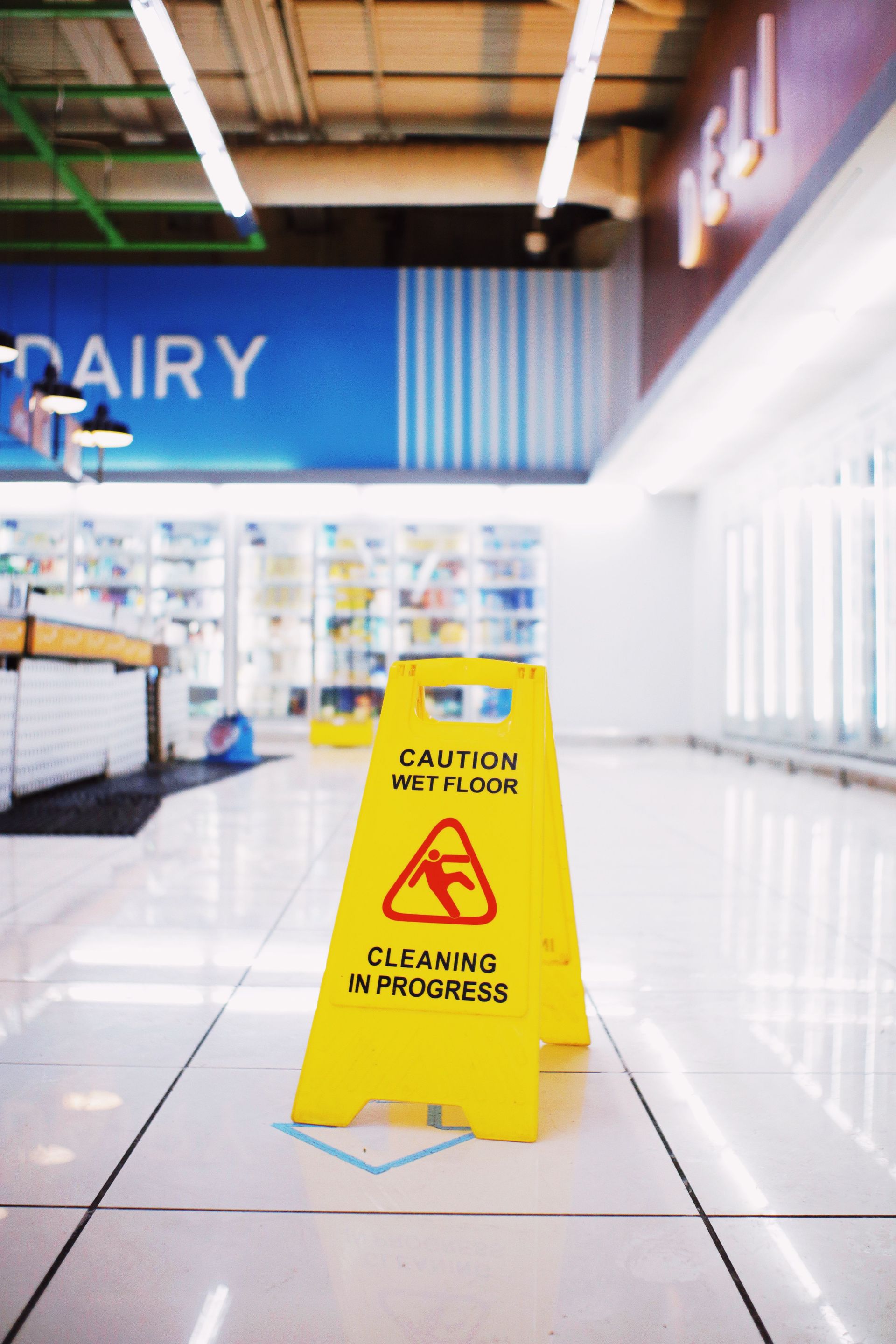
- Wet or slippery floors: Spills, leaks, tracked-in water, and recently cleaned floors can cause falls when the danger is not addressed or adequately marked.
- Uneven walkways: Cracked sidewalks, raised pavement, broken steps, and unexpected changes in elevation can create tripping hazards.
- Poor lighting: Dark stairwells, walkways, entrances, and parking areas can make dangerous conditions harder to see.
- Broken stairs and handrails: Loose railings, damaged steps, and missing handrails can cause a fall or make an existing hazard more dangerous.
- Inadequate security: Some claims arise after assaults or other criminal activity when a property owner allegedly failed to address a foreseeable security risk.
- Defective equipment: A malfunctioning elevator, escalator, automatic door, or other piece of equipment may raise questions about both property maintenance and product liability.
Identifying the hazard does not by itself establish that a property owner was negligent. Mooneyham Berry investigates how long the condition existed, whether similar problems had been reported, and whether reasonable steps were taken before someone was injured.
Inadequate security claims require a different investigation. Prior incidents, complaints, police calls, lighting conditions, security measures, and surveillance records may help establish what risks existed at the property. We examine that history to determine what the property owner knew and how the owner responded.
How Mooneyham Berry Investigates a Premises Liability Claim
The person or company named on the property deed is not always the only party responsible for an unsafe condition. A landlord, commercial tenant, property manager, maintenance company, or cleaning contractor may control the area where an injury occurs.
At Mooneyham Berry, we identify who was responsible for inspecting, maintaining, and repairing that part of the property. Leases, maintenance agreements, and service contracts may show how those responsibilities were divided. When more than one party had control, we examine the role each played. At the same time, we work to preserve evidence before the property changes. Depending on the circumstances, our investigation may include:
- Photographing the hazard and surrounding area before it is repaired or removed.
- Requesting incident reports, inspection logs, maintenance records, and repair histories.
- Seeking preservation of relevant surveillance footage before it is overwritten.
- Identifying witnesses and employees who were present when the injury occurred.
- Preserving shoes, clothing, or other physical evidence when relevant.
- Reviewing leases and service contracts to determine who controlled the area.
- Documenting medical treatment and how the injuries affect work and daily life.
If you are able, photographs taken soon after the injury can be especially useful. Include the surrounding area and something that shows the size or height of the hazard. Photograph warning signs, lighting conditions, flooring, stairs, railings, or anything else that may have contributed to what happened.
Keep the shoes and clothing you were wearing rather than discarding them. Footwear can become an issue in a fall claim, and the condition of a shoe may itself provide evidence. If an incident report is prepared, ask for a copy and review what it says before signing it.
Some evidence can disappear quickly. A spill may be cleaned, broken pavement may be repaired, and surveillance footage may be overwritten. Mooneyham Berry works to preserve available evidence and obtain the records needed to determine what the responsible parties knew before the property changed.
Common Injuries in Premises Liability Claims
Unsafe property conditions can cause injuries ranging from fractures to permanent neurological damage. Falls are particularly dangerous for older adults. The CDC reports that falls are the most common cause of traumatic brain injuries among older adults.
Common injuries in premises liability claims include:
- Broken bones: Falls can cause fractures of the wrists, arms, ankles, hips, and other bones. Serious fractures may require surgery and extended rehabilitation.
- Traumatic brain injuries: A blow to the head can cause a concussion or more serious brain injury. Symptoms may affect memory, concentration, balance, mood, and independence.
- Back and spinal injuries: A fall or other property accident can injure the vertebrae, discs, or spinal cord. Severe injuries may affect mobility and require long-term care.
- Soft tissue injuries: Damage to muscles, ligaments, and tendons can cause lasting pain and limit movement even when no bone is broken.
- Cuts and scarring: Broken glass, exposed metal, defective equipment, and other property hazards can cause deep wounds or permanent scars.
- Assault-related injuries: Inadequate security claims may involve physical injuries and other harm resulting from an assault on the property.
At Mooneyham Berry, we document more than the diagnosis itself. We look at how an injury affects your ability to work, move independently, care for your family, and participate in everyday life. When a property injury results in death, surviving family members may also have a wrongful death claim.
Compensation may include past and future medical expenses, lost wages, reduced earning capacity, pain and suffering, and other losses tied to the injury. Some insurance policies also include medical payments coverage that may apply regardless of fault. We review available coverage and any proposed release before advising a client about settlement.
Deadlines and Fault in South Carolina Premises Liability Claims
How Long Do You Have to File?
South Carolina generally gives an injured person three years to file a premises liability lawsuit. Different rules apply when a government entity controls the property.
Under the
South Carolina Tort Claims Act, an action generally must begin within two years. A three-year period may apply when the injured person first files a qualifying claim under the Act. Mooneyham Berry identifies potentially responsible parties early so the correct deadline can be evaluated.
What If the Property Owner Blames You?
South Carolina follows modified comparative negligence. You may generally recover if you are 50 percent or less at fault. Your compensation is reduced by your percentage of responsibility.
An owner or insurer may argue that you:
- Were distracted when the injury occurred.
- Ignored a warning sign.
- Wore inappropriate footwear.
- Should have noticed or avoided the hazard.
An owner may also argue that the danger was open and obvious. Mooneyham Berry examines the lighting, warnings, visibility, property conditions, and other evidence before accepting that argument.
Why Choose Mooneyham Berry for a Premises Liability Claim
Premises liability cases often depend on evidence the property owner or another business controls. Inspection records, surveillance footage, maintenance histories, and witness testimony can determine whether a dangerous condition should have been addressed before someone was hurt.
Mooneyham Berry brings more than 40 years of combined experience to representing injured people. Our attorneys understand how insurers evaluate injury claims and prepare cases with litigation in mind when responsibility is disputed.
When we handle a premises liability claim, we focus on:
- Preserving important evidence: We act to identify surveillance footage, property records, photographs, and other evidence before it disappears or changes.
- Identifying the responsible parties: We examine who owned, occupied, maintained, or controlled the area where the injury occurred.
- Building the claim around the facts: We use records, witness accounts, medical documentation, and other evidence to establish what happened and how the injury affected your life.
- Preparing for disputed claims: Property owners and insurers may challenge notice, fault, or the severity of an injury. We prepare to address those arguments with evidence.
- Keeping you informed: We explain what we find, what it means for your claim, and what comes next.
From our Greenville office, Mooneyham Berry represents injured people throughout South Carolina. We advocate for our clients while giving them clear information about the decisions that arise as a claim develops.
Talk With a Greenville Premises Liability Lawyer
A serious property injury can affect your health, income, mobility, and ability to manage everyday responsibilities. You should not have to determine who controlled the property or prove what they knew while you are trying to recover.
At Mooneyham Berry, we listen to what happened and give you a straightforward assessment of your options. If we take your case, we investigate the dangerous condition, identify the responsible parties, protect your interests, and pursue accountability. Throughout the case, we keep you informed about what we find, what it means for your claim, and what comes next.
Our office is located at 1225 S Church Street in Greenville, and we represent injured people throughout South Carolina. If an unsafe property condition has changed your health, work, or independence, contact Mooneyham Berry and tell us what happened.